Review of www:wake by Robert Sawyer

www-wake-cover When I first started reading science fiction, I didn’t really like it at first. It wasn’t until I started reading Frank Herbert’s Dune that I enjoyed its possibilities. To me, science fiction is at its utmost best when it extrapolates and experiments, taking the “what could be’s” and turning them into “what if’s.”

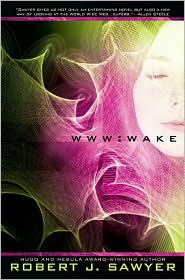
www:wake by Robert Sawyer is that kind of a book. It takes a slice of our modern, everyday life and the topic on everyone’s mind — the internet. The first in a trilogy, this book is about a young, blind girl named Caitlin who wishes to see. Internet savvy, Caitlin travels from her Canadian homeland across an ocean to find her elusive sight.

Caitlin Decter is young, pretty, feisty, a genius at math—and blind. Still, she can surf the net with the best of them, following its complex paths clearly in her mind. But Caitlin’s brain long ago co-opted her primary visual cortex to help her navigate online. So when she receives an implant to restore her sight, instead of seeing reality, the landscape of the World Wide Web explodes into her consciousness, spreading out all around her in a riot of colors and shapes. While exploring this amazing realm, she discovers something—some other—lurking in the background. And it’s getting more and more intelligent with each passing day… –SOURCE: www:wake on Amazon.com

What’s interesting about this book, is not the mechanics of the plot or the story. It’s the character of the internet looming ominously in the background. It’s the social commentary on how we interact with the world wide web and how our world is connected. (That connectivity reminded me of the Otherland virtual reality series by Tad Williams which is now being made into an MMORPG.) As the first book in the series, www: wake lays the foundation for what is to come.

If you are remotely involved with the internet or a self-proclaimed math geek, I think you’d really enjoy this book. The development of an internet consciousness is fascinating (and a bit scary) to read, and Caitlin’s mathematical prowess acts as a benchmark of the internet’s character evolution. In a way, I regarded the character as a modern-day version of Ghost in the Shell, but more gritty and realistic. I also enjoyed the fact that Caitlin — although blind — was not a helpless character, but is depicted as a normal teenager who has her ups and downs just like everyone else does. Her blindness is not a crutch, in this instance, but an integral part of the story. It’s the way we “see” the internet’s true nature and watch as he twists and shapes into a higher consciousness. To what end? Well, that’s what book two is about.

In www:wake, Robert Sawyer asks the question, “What if the internet was a living consciousness?” I don’t know about you, but the thought that it could even remotely be possible scares the living snot out of me. Which is probably why this first book was so interesting to me, because after all — that’s what science fiction is (in my mind) supposed to be about.

Not Happy with your Writing? Pick Up a Pen instead of a Keyboard

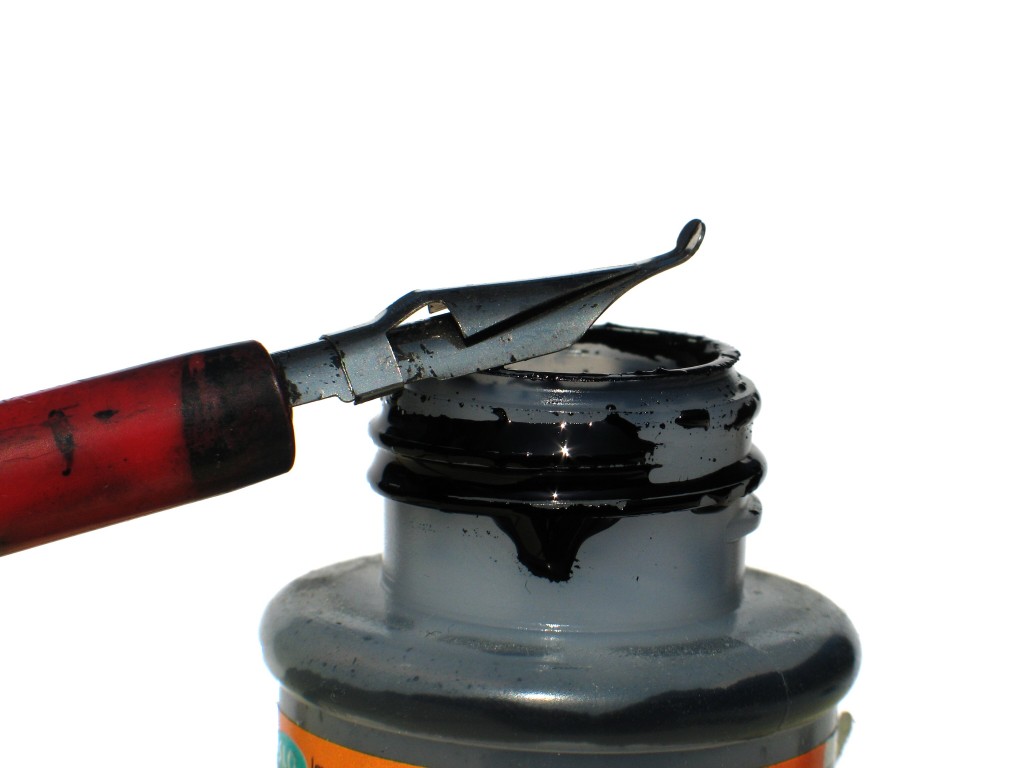
penOne of the things that I’ve discovered, is that if you overload yourself on the business of writing and the essentials of everyday life, your writing can be affected in ways that you don’t even realize. I find that this is especially true if you “rush” toward a deadline.

If you find you’re not enjoying your writing anymore, or if you realize that your writing has become crunchy and mechanical, I recommend putting away your keyboard and picking up a physical pen instead. Sometimes, all it takes to create a great story, is to channel the writers of old by getting back to the basics of writing implementation. Sometimes, all you need is a great pen, a journal or an old typewriter and some fancy paper to remind yourself that writing is not just about typing away on your computer. Often, the way we put the words down on the page can have as big of an impact on us as what we’re writing.

How do I break away from the computer while I’m on deadline? I’ve found some great writing implements and other creative tools that I use to help me focus.

glass-pen-and-ink-set I picked up this glass pen and ink set at a renaissance faire. The glass pen can also be found underneath a special name, as a Murano glass pen. What’s neat about this set is that it’s pretty inexpensive yet you get two glass pens and six inkwells of various colors. I’ve had a lot of fun with lettering using my set, too.

I find that it’s essential to have on hand an excellent box of paper for all manner of correspondence. My box is a stack of #24 pound, white linen paper with matching envelopes. They weren’t cheap (good paper never is) but it’s an investment that I don’t regret. When I’m offering writing submissions through print, I typically print out my cover letter on my fancy paper then opt for plain, white paper for the actual story or article. You can typically find a really nice box of paper through your local printing company, or you can go to an office supply store. Expect to spend about seventy-five dollars for the set.

dover-ornate-letters-and-initialsI’ve mentioned the products that Dover Publications offers before, in my review of five copyright-free clipart and photo sites. Through Amazon, you can get the books discounted at a great price, and you can sign up for free art samples from Dover directly. I really enjoy this particular book because I can use the ornate letters in various writing projects for that extra touch. The ornate alphabets range from medieval lettering (i.e. what you might find in projects for illumination) to Victorian-era replete with scrollwork and ivy. Why not make your own stationery for your business letters and correspondence? When was the last time you sent a hand-written note?

Last but not least I’d like to mention some of the journals I’ve used over the years. Every journal I own has a history to it, either I’ve received one as a gift or I’ve picked one up for a special occasion. One of my favorite types of journals to get are the ones with a magnetic flap on the front. Although it takes a little getting used to, the flap is nice because you don’t have to worry about the journal’s pages opening. I’ve seen many fellow writers taking a journal with them everywhere to write ideas down, and this is a practice I need to do more often.

Hope these ideas have inspired you. If you have any to share, let me know!

Breaking News: Using Facebook Pages? Log in ASAP

Just wanted to give everyone a heads up who is using Facebook “fan” pages. Yesterday, Facebook changed those pages to look more like profile pages, and added some new functionality. 3rd party ads are now more visible, you can provide a status update and they look more like a personal page. (Additionally, there is no ability to update your status message automatically by adding an “app” to connect with Twitter, either.)

However, if you have an existing account this new functionality is a hindrance rather than a benefit. The profile information that you had filled out to go underneath your logo is shifted to a new tab, and most of your customization has shifted.

If you’re using a Facebook page, I recommend logging in to see if this works for you. Otherwise, you can join me today while I dig around and see how I can make mine look better.

The Importance of Chasing Rainbows

rainbow“Chasing Rainbows” is a phrase that describes someone who’s going after a dream that’s impractical and foolish. The phrase has often been used to describe writers who have unrealistic expectations of how well they can write and what they are worth. “He thinks he’s Hemingway, but he’s never published anything before. He’s just chasing rainbows.” “Can’t believe she thinks she’s going to make $100,000 off of her first book, she’s just chasing rainbows.”

No one can catch a rainbow, right?

We’ve all known writers who had unrealistic expectations. By “unrealistic” I mean that they expect to make millions of dollars on an uncompleted project or believe that they’re famous and everyone knows who they are — even though they’ve only written one short story for a free magazine. We’ve laughed at them, we’ve made snarky comments privately, and we’ve all rolled our eyes at them — up until one of them does “make” it. Then we wonder how the heck that happened. Was it luck? Fate? What?

The reason why I believe any writer finds that proverbial pot of gold at the end of their rainbow is not because they were lucky or because fate deemed that they were successful. It’s because they were persistent. Not only did they chase the rainbow, but they did everything they could to find that pot of gold by persistently improving their craft, submitting fiction and non-fiction, networking, etc.

We all know that being a writer isn’t easy, which is why our rainbows are so vital to us. Sometimes, when we talk about what could happen we allow ourselves to believe that it might. It’s up to us then to doggedly pursue those rainbows in the best way that we know how.

So the next time you think a writer is chasing rainbows, I encourage you to take a step back and find out if they’re really wearing rose-colored glasses. All writers need a rainbow, and as long as we’re actually writing? I’m okay with that. How about you?

Why am I Developing a Brand?

It’s been a whirlwind of a week. In this series on personal branding lessons, I covered twenty tips. (Links at the bottom of this post). On the last day of this series, I’d like to talk about my own thoughts on branding so you can help yourself decide what you want to do. (I’d like to mention that this post is dedicated to one of my Twitter followers @strangeshe.)

Developing a personal brand isn’t something that really came to my mind until fairly recently. The reason for this is because my focus has been on getting contracts and building my portfolio. My publications have included: corporate blogging, articles, short stories, games, novellas, business plans, technical documentation, etc. Although I enjoy different writing styles, I am in love with writing fiction.

As a very goal-oriented person, I’ve always known what I wanted to be when I grew up — I just didn’t know how I was going to get there. When you’re a professional writer, it’s very easy to over-commit to assignments. Getting paid to write is a wonderful feeling, sure… but building a strong portfolio has been equally important to me and that has been my focus for a number of years.

In today’s market, it’s even more challenging to make a living as a novelist or a fiction writer than when I first started to write. (First-time novelists typically make $5K on their debut book.) Fortunately, I have a “day job”TM that I love and a great team of people to work with, some of whom are writers like myself. Now that I have the experiences and portfolio that I’ve personally needed to move forward, I felt that I could take the lessons that I’ve learned and apply them to my “brand” as an author. No, I’m not as well known as Steven King. No, I’m not a top-of-mind name like Ann Rice or Neil Gaiman or any popular author that you might know — but one day I could be. So could you.

Developing a personal brand for me simply means I’m helping establish guidelines and a professional reputation for myself as a writer.

Whatever you decide your path is as a writer (freelancer, copywriter, etc.), I feel that branding is a long-term strategy that involves both personal and business-related decisions.

Previous Posts Next Posts


Looking for Monica’s books and games that are still in print? Visit Monica Valentinelli on Amazon’s Author Central or a bookstore near you.

Archives

Back to Top