
Guest Blogger: Freelance Reporter Chris Welch on his Coverage of Wisconsin Flooding

Folks, I have a rare treat for you. Today I’d like to give the floor to freelance reporter Chris Welch, who has been covering the flooding in the state of Wisconsin. I had met Chris at a science fiction convention in Madison called OddCon where we were speaking on some of the same panels. Chris is the sort of guy that you’d like to hang around; he’s very personable and loves to write and speak about writing. In his first-ever blog post, Chris speaks from the heart, talking about what it’s like being a freelance reporter when a tragedy like the Wisconsin flooding occurs.

“They’re not talking about us.”

That statement, a frustration voiced by a Fort Atkinson resident about his flooded neighborhood, also provided a concise reason why writers like us write.

I’d like to thank Monica for the opportunity to guest-blog here. “Words on the Water” seems the most fitting place to blog on writing about floods and the stories surrounding those floods.

There’s a 30-county region of Wisconsin affected by various forms of saturation. But, as a freelance reporter for a small-town newspaper, I’m only concerned with one, Jefferson County. The newspaper covers three main cities here: Fort Atkinson, Jefferson and Whitewater (which is divided by Jefferson and Walworth Counties.)
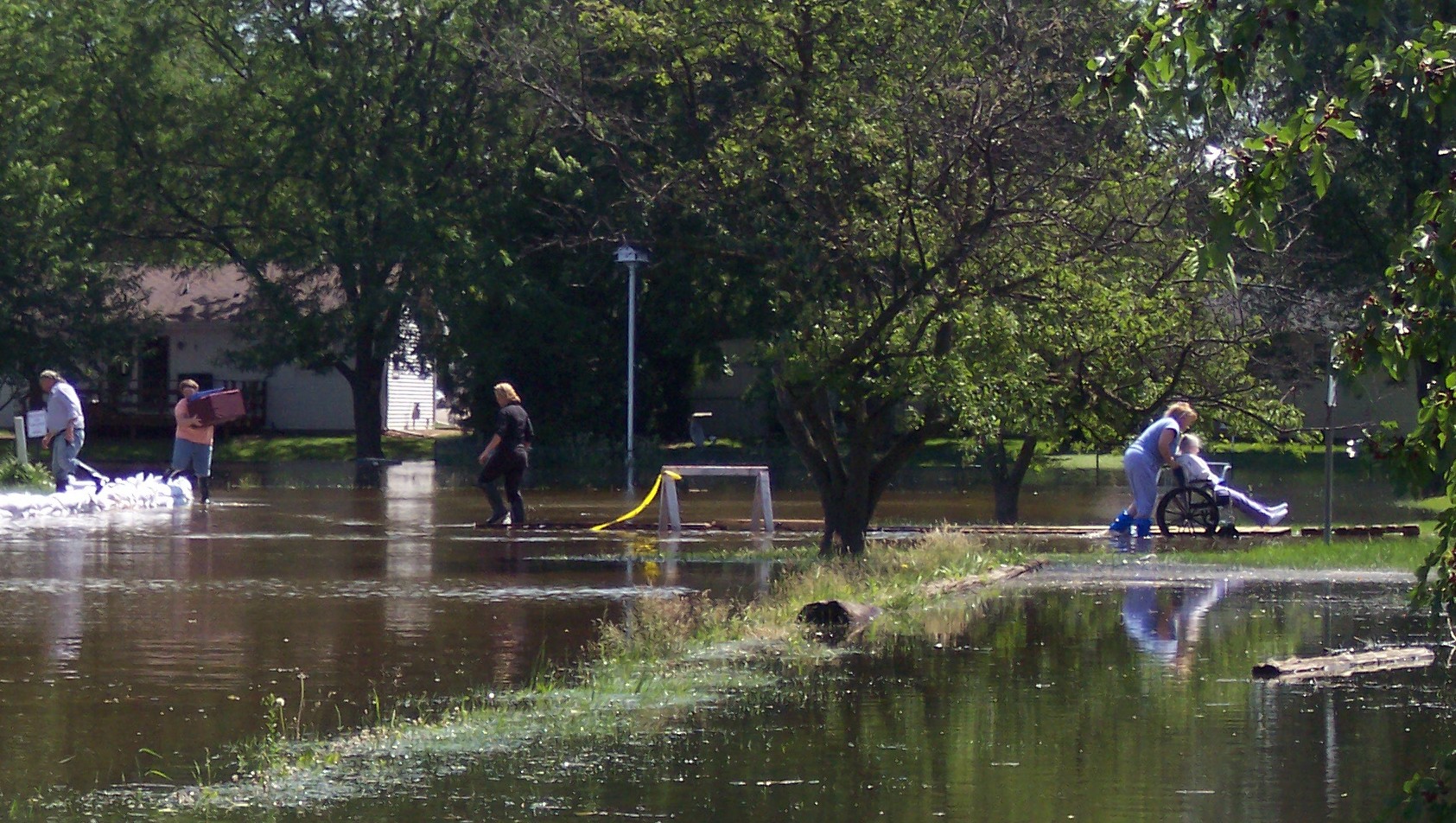
Picture of Wisconsin Flooding in June 2008My usual beat is Whitewater, Wisconsin. It was spared major flooding, so my editors asked me to cover some flood-related stories, which affected the cities of Jefferson and Fort Atkinson most drastically.

Except half the stories I covered this week were other stories — stories that the flood did not have any affect on at all. Despite evacuated homes and businesses, there were other things people wanted to talk about. I’ll get to those in a moment.

The floods had their own tales, which were stories for me to tell.
Read More…

Credit: It’s the Greatest (and the Cheapest) Gift you can Give

Today I’d like to talk about credit. Not the kind of credit you need to buy a house or a car, but the credit that you see when you first open a book or watch a movie. Nope, I’m talking about the credits that typically come from working on a project either alone or with someone else.

As I talked about earlier this week, I mentioned how important it is to look at the non-financial methods of how you feel validated about your writing. I think it goes without saying that this is a common desire for many writers, and I feel that there is a way we can help each other out. Giving someone else credit for the work they do is a great way of supporting your fellow scribe, because credit is free.

In my travels to various conventions, I’ve met quite a few “B”-list actors and stunt folk that have been kind enough to explain to me what it’s like working on various sets. One of these actresses (who shall remain nameless for privacy reasons) once told me how she doubled for an “A”-list actress in a well-known action movie. For whatever reason, the “A”-lister proclaimed that she did her own stunts to the media, which is not an uncommon thing for actors and actresses to do. Unfortunately, in this case the claim wasn’t true but there was no appropriate way for anyone involved to go and correct the mistake. Years later, the stunt double still remembers the claim and (you guessed it) will probably never forget it. What did the “A”-lister do wrong?
Read More…

How I Use Google Analytics for my Blog

Over the course of this blog I’ve talked about Google Webmaster Central for bloggers, Why I Heart Feedburner and Google’s Blogger: Pros and Cons for Freelance Writers. Today I’m going to talk to you in very general terms about how I use the free web analytics tool called “Google Analytics” on my blog.

Before I do, I’d like to offer that if you’d like to read up on Google Analytics there’s nothing like going straight to the source: you can read the Google Analytics Blog or the ROI Revolution Blog which is the company that performed the training I had attended. Second, web data is not like financial data no matter how many ways you slice and dice it. This means that while every penny may add up in your accounting software; not every visit will “add up” in web analytics so don’t get too obsessed over every, bitty thing.

Since installing GA early January, I’ve been using it to track comparison trends and understand where my traffic is coming from. My goals for my blog are different than a website that sells stuff or offers rapid-fire information; I hope that my content will be useful six months, a year, or even five years from now. I do not have buckets of traffic where I have even 1,000 plus visitors every day. Another way my needs are different from other blogs, is because blogging is a way for me to explore more tools, stay on top of web trends, network, make announcements and offer you my experiences to “pay it forward.” I’m not blogging for dollars; if I was, you’d better believe I’d be doing things differently.

Here’s an example of the comparison view graphs you can use to track trends in Google Analytics.
Read More…

Dollars versus Dreams: When Writers get Hung Up on “Measuring Success”

Dreams have no shape, they are whispers on the wind that tickle your senses and tease your mind. Full of possibilities, dreams are so easy because they don’t speak to the work required to achieve them. They’re ghosts and mirages that are just out of reach, easier to grasp because they seem to come from that part of you that creates. That part of you that still believes fairies are real and the boogeyman does exist. It’s not quite the same well that you draw your creativity from but close enough.

Your family and friends know “you” and the roles you play; they can’t get inside your head but they know you for who you are right now, right this minute. Your bank account knows your financial situation, because the dollars and cents add up telling you whether or not you’re really “making it” as a writer. Only you know how your dollars match your dreams; the two are not mutually exclusive because you understand that money is a means to an end.

But you’re stubborn, and you have a dream of selling lots of books and earning beaucoup dollars. Have you planned to get their with your long-term goals?

Long-term goals are two parts planning, a healthy dose of discipline, a sprinkling of wishes and a lot of flexibility. But those longer-term goals don’t come without achieving the balance between responsibility and creativity: you have to think outside the box and sometimes, you have to forget what money you have to do it.
Read More…

Sample Phrases to Politely Turn Down New Projects

Yesterday, I had talked about when (and why) you should consider turning down new projects. Today I’d like to give you some sample messaging around this topic and point out why it’s a good idea to come up with a strategy to turn down work. Regardless of your reasoning why you want to turn down work, it’s often a good idea to communicate something back for several reasons ranging from professionalism to preventing email miscommunication.

Smart Victorian Lady’s Polite RefusalThe tendency to turn down projects is to say something generic like, “I’m booked working on other projects.” If you have a blog, online journal, or socially network on MySpace, LinkedIn, Facebook, etc. and you put yourself out there saying that you’re looking for work, make sure that your public profile matches what you’re telling people who want to hire you. This may seem like a no-brainer, but please: do not make the mistake of begging people for work and then turning someone down because you don’t want to work for them. The “I’m-too-busy” excuse really makes you look bad–especially when the person you turned down reads what you’re up to. Of course, there is the flip side when you are “that” busy. When that happens, be clear and be honest; there is no guarantee that the other person on the other end of the computer won’t misinterpret what you’re saying, but there is really very little you can do about that.

Here are a few samples of how you can politely turn down “new” work for different reasons ranging from time constraints to concerns about whether or not the publisher will pay:
Read More…

Previous Posts Next Posts


Looking for Monica’s books and games that are still in print? Visit Monica Valentinelli on Amazon’s Author Central or a bookstore near you.

Archives

Back to Top