
The Hazards of “Getting There First”

As I’m sure everyone knows, there’s a big shake-up happening in the world of traditional journalism. Print newspapers are shrinking — both their staff and their printed size — sending many journalists to the highly competitive world of online publishing.

speed-racingOnline publishing is fairly competitive, because in many writers’ minds — in order to get your article read, you need to be the first one to break the story and publish it online. In theory, the idea that you need to “get there first” sounds no different than if you worked for a brick-and-mortar newspaper. In practice, “getting there first” without having the time to vet your sources or discover whether or not a blog is credible may be questionable because of the way the internet functions.

When someone writes for an online news publisher, that content gets syndicated in hundreds of places and is also picked up by the search engines. With the online space, publishing a news piece is a lot like throwing a stone into a pond and then watching the ripple effect. You’ll not only “see” when others are reading your content through web analytics, you’ll also know when someone is “talking” about your article through the comments, other blogs and places like Twitter, Facebook, etc.

If a print newspaper makes a mistake, they can print a retraction. If you make a mistake online, you can edit your original article. Unfortunately, the timing of your edit may take place after others have already commented on and spread the wrong information. In my mind, this means that writers need to be extraordinarily careful when posting online “news” content especially since courts are considering libel cases for blogs. Here is a link to the EFF overview of the Online Defamation Law. Remember, internet law is very “young” and there are a lot of rulings still in development. Just recently, the FCC started cracking down on online testimonials. (FTC Concludes Case Against Marketers of Xenadrine EFX)

Besides legal issues, there’s another reason why getting your information correct is so important: your news article is archived on the web. With print, you have a situation where many newspapers get recycled or tossed. It’s difficult to find older articles unless you go to the “Morgue” or a library to look them up. With the web, natural search (e.g. typing in what someone wants to find in a search engine) is an instantaneous reference system that doesn’t necessarily order content by the date of publication. The result? When a reader wants to reference old content that’s easily accessible, sometimes rumors (like the Prop 8 Overturned Rumor on Twitter) can ensue.

    Update: Less than a day after I posted these thoughts the very same effect happened again, this time with the Iran elections. Whether it was due to the chaos or the speed at which information was flying around, in addition to “good” information, several old pictures of violence in Afghanistan were passed around on Twitter as if they happened that day in Iran. CNN and the major news networks did not “jump” on the reporting, which spurred comments of “CNNfail.” I didn’t (and won’t) pull examples of folk who spread bad information around. The info was flying so fast, there seemed to be thousands of micro-blogging posts an hour. I honestly believe this was another case where people didn’t read or visit the links they were sharing.

Another reason why sources are so important, is because I’m also seeing that citizen journalism is becoming more and more popular. “Citizen” journalism in my mind, is when a writer who is not affiliated with a news publication breaks a story through their personal websites. Savvy journalists need to keep this in mind, because some (not all) citizen journalists do not check their sources. This is why search — e.g. searching keywords in multiple different ways and word orders — is a journalist’s best friend. As I’ve mentioned earlier, the internet is full of self-titled experts who may (or may not) have a background in the subject matter they claim to have knowledge in. In this case, you are the expert in your field, so don’t be afraid to take a few extra minutes to offer relevant and accurate content.

Finally, the last reason why you want to be careful about “getting there first” is because your reputation is at stake. When a reporter makes a mistake online, the drama that ensues may blow over quickly. However, your online reputation may be affected in the long-term because when people look for your name, they’ll find that “typed” drama days, weeks and months after the fact. (For more information, read the NYT article about How to Manage Your Reputation Online.)

As a journalist, you are the expert in writing news, but there may be some simple ways you can “get there first” and ensure your reputation is protected:

  • Understand SEO – Whether you visit Google Webmaster Central for an SEO starter guide or follow Search Engine Land, read up on search engine optimization and learn how it affects your web copywriting. I recommend keeping up on the topic because search is constantly changing.
  • Specialize in a Few Topics – By embracing a limited amount of topics, you can structure your articles and make a name for yourself in that particular area. It is easier to “get there first” if you know your source material well and can pull from an established list of sources.
  • Be Clear About Rumors vs. Facts – If you’re still on deadline and can’t verify one of the sources, I’d still write the article but be very clear what you weren’t able to verify by citing rumors and facts. That way, if a reader misinterprets your article your bases are covered because you’ve written, “According to an unverified source…” etc.
  • Timestamp or Date your Edits When Appropriate – Many articles also “update” the original with an “edit” that offers clarification or fixes after the fact. I recommend dating these edits in your copy, to prevent confusion. This might apply to “breaking” news stories that are constantly evolving.
  • Write for Credible Publications – The other side to online journalism, is to find a publication that is reputable. Don’t be afraid to turn down assignments if you feel it might hurt your reputation.

If you’re writing online, don’t be afraid to monitor your online reputation, too. In my mind, Googling yourself is no longer an act of vanity because your employers, readers and friends and family are doing the exact, same thing. By applying simple edits and SEO tactics, you can still “get there first” without damaging your reputation and ensure you’re following journalism’s time-tested ethics.
Publishing’s Future may be a Paradigm Shift

One of the hot topics over the past, few weeks as been the “future of publishing.” At BookExpo America, the Future is Digital, according to the Washington Post. (You can also find a lot more information on the topic through Publishers Weekly.) While I’m offering my opinions related to the future of professional publishing and the digital market in this post, a word of caution — digital publishing is currently a tiny, tiny market. During a panel at WisCon, Tor Books relayed that of the entire book publishing industry, 98% of those are in “hard goods,” whereas that remaining 2% is digital. Perhaps due to the economy and/or the popularity of the Kindle, digital has exponentially grown over the past year even though book sales have declined slightly. (Remember, in a downturn economy people might be more likely to visit their local library and check out books for free as opposed to buying them.)

What is the Potential Market?

First, let’s look at some numbers that will help put internet usage into perspective and see if they reveal anything about the “potential” market for publishers online.

Take into consideration that the saturation of internet users in the U.S. is 75%(1). Even if the internet usage stats (after some digging, I found were pulled from Nielsen online) are accurate, they don’t show what people are using the internet for. Are they looking at all of the 109,734,433 active domains on the web? (2). Probably not, since Nielsen states that the average time a visitor spends reading a web page is less than a minute. Alexa’s top-ranked websites only show us part of the story, because you’ll notice that search engines, blogs and social media sites comprise most of that top 25.

The point that I’m trying to make here, is that even though internet usage is rampant, visitors use the medium for different reasons and there are a lot of websites trying to grab their attention. Unlike a physical bookstore where you have so many chances to make an impression on a potential buyer, the web is flooded with information — including ads — that are vying for that visitor’s attention. As every bookseller knows, positioning is key. The same may be true for the web, but the question remains “where” that positioning will be the most relevant to get the greatest effect.

Why a Paradigm Shift Might Be Necessary

Working for both online-and-offline companies in both the public (government) and private sector, I can tell you that there is a definite difference between a company that focuses their efforts online vs. offline. Online companies move faster, keep up on daily (if not hourly) trends, and have to make quick decisions that they can then track through virtually instantaneous data streams. As I’m sure you’re aware, offline companies might be structured around seasonality or production timelines, which may be supported by their web presence. The pace in an offline business can be much slower than an online one, depending upon which market you’re in.

Although publishing may not continue in the same vein as it has been, I hope that they don’t place all of their emphasis into an online presence. We’re still in the “Wild, Wild West” of the internet, where specific legal rulings could dramatically impact accessibility and deliverability of content. I’m seeing many businesses pour everything into online marketing because it’s “free” (e.g. have a website), but I think this may yield disastrous results over the long-term. There are a number of factors in flux that may affect publishing, some of which also relate to other businesses as well.

    a) Internet Law (copyright, piracy, social media rulings, net neutrality, etc.)
    b) Production Schedule (Time to Market)
    c) Offline “Support” (bookstores, schools, libraries)
    d) Technology (online and offline)
    e) Pricing (free vs. paid)
    f) Content Saturation and Distribution

Hopefully, publishers will continue experimenting while keeping an eye on the bigger picture. (Tor and Harper Collins are two examples of publishers who are dipping their toe into the space.) Book publishers have a unique challenge, because their product (e.g. “books”) can be offered in multiple mediums. This may be good news for the longer-term, because a product that can be adapted either physically or electronically is a product that has the potential for great accessibility.

What’s to come? The future is anyone’s guess, which is why I highly recommend that authors stay on top of these changes. Either way, it’s pretty exciting stuff!

My Philosophy on Writers, Readers and Critics

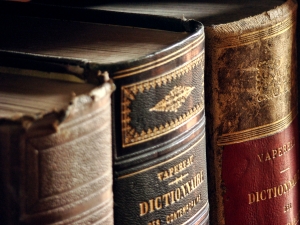
old-booksAfter a very, busy week following my appearance at WisCon 2009, I felt it was time to sit down and share my philosophy toward other writers, readers and critics. In the past, two weeks I’ve met more new people on-and-offline than I have in the past year. Since many people are unfamiliar with me and my work, I thought it best to put into words that which I feel so passionately about…

I believe that both readers and critics, regardless of education or background, have a right to their informed opinion. By “informed,” I mean I would hope they’d read a book before providing an in-depth dissertation about it. Sometimes, I am amazed how deep that rabbit hole of criticism goes. Sure, I have opinions about the books I read (and admittedly a few popular ones I haven’t) but that doesn’t mean I don’t recognize how valuable all books are. Even though I might not like a particular story, it might appeal to someone else. In my mind, that’s a win-win scenario for literacy because it means that there’s a story for everyone.

When it comes to my own work, I know that what I write may not appeal to everyone. No one likes crappy reviews or readers trashing their work, because even though writing is a “job” (e.g. you often get paid) it is also an extension of yourself. Immutable and defined, a writer’s published work becomes a testimony not only to the voices we hear in our heads, but the whispers we hear through the trees, in rush-hour traffic, or on the beach.

Writing often gets depicted romantically, as if being an author means that you have finally reached a utopia in which the entire world bows at your feet for your brilliance, your personality and your creativity. Nothing — and I mean nothing — could be further from the truth. Creativity, in any form, comes with a price because creative people think differently from non-creative people. Different for me meant “not like everyone else,” which led to a lot of confusion, personal angst and career building frustration until I started meeting other writers.

Although I have a college degree in writing, it wasn’t until I fell into the gaming industry that I truly felt welcomed. Professional authors and game designers welcomed me as a “new” writer, even though they had no real reason to do so. Their kindness shocked me, because in my past almost everyone I knew viewed other writers as “competition.” This harsh attitude had affected me deeply: for a number of years I was very bitter and negative about anyone else’s success, yet arrogant about my own. I’m sure you can imagine my surprise when I was not only showed compassion and understanding by perfect strangers, but leads and writing assignments as well.

I’ve been a part of the gaming industry now for six or seven years, and I have not forgotten what a difference positivity makes. A single conversation over beer was the catalyst that helped me transform bitterness into positive energy. It is my hope that I can bring that same kindness that was shown to me by having a supportive presence on-and-offline for other like-minded writers as my time permits.

Part of my long-term goal is to be a novelist (either part-time or full-time), and admittedly I don’t know if that will ever happen. Regardless, it is my belief that celebrating someone else’s successes is just as important as cheering for your own. Only through a sense of togetherness will we build a creative community that supports and helps one another.

WisCon: the Recap

Billed as a feminist science fiction convention, I wasn’t quite sure what to expect when I walked through the doors to WisCon for the first time. Held at the Concourse hotel in Madison, this was — by far — the best organized event I’ve ever attended. (This includes both the gaming-related and business events I’ve ever visited and spoken at.) I feel that this fact alone demands a certain sort of respect, given that this remains a volunteer-run organization.

As you may recall, I signed up for four panels and ended up moderating two of them. In addition to those panels, I attended several others that seemed interesting to me related to writing and publishing. In my opinion, I felt the audience was fairly responsive and respectful of the opinions that the panel offered. There were panelists from diverse perspectives and backgrounds, which provided for interesting discussions and audience participation. Unlike other panels I’ve spoken on, I also felt that the audience came with a basic understanding or desire to acknowledge the business functionality of both publishing and the entertainment industry. Translation? I had more conversations about online marketing and social media with other writers than I did about any other topic.

The publishing industry as a whole is shifting and changing so rapidly, that many authors I talked to feel that they need to embrace aspects of online marketing to monetize their efforts and sell more books. In an ideal world, a publishing company would allow the writer to simply write and provide the PR for them in order to sell books. Given the reality of today’s market and volume of publishers, I believe that even if an author doesn’t “do” their own marketing, they should at least be aware of what’s going on in the space.

There were a few topics that I’ll cover in later blog posts which I feel warrant further discussion. For example, I had brought up the issue of network neutrality in a panel discussing print vs. e-publishing. Another topic I’ll address is the challenges of establishing a writer’s community, and how the internet truly “seems” to be having an impact on how offline communities are shaped and supported.

Here are a few of the wonderful writers and editors I had the pleasure of speaking on panels with:

  • Lori Devoti – Lori’s new book, Amazon Ink, just debuted a few days ago. She’s a very passionate and energetic writer who brought a lot to our discussion about Consistency vs. Variety in book series. Lori started her writing career in romance, but is now writing urban fantasy. Watch for a special treat from Lori on www.flamesrising.com in the next, few days.
  • Kelly McCullough – Kelly is working on a novel series which debuted in 2006, called WebMage. He has a love for world-building, which shows both in his books and the discussions we had about Consistency vs. Variety. If you’ve never met Kelly, he’s a very likable guy with a great sense of humor.
  • John Helfers – Both an author and writer, John and I wrangled a panel about Reinventing the Adventure in the wake of our moderator’s absence. Wearing probably the coolest t-shirt I saw at the convention, (Any Firefly fans out there?) John was an animated and experienced speaker who had a lot to say on the subject. If you’re a fan of John’s work (HINT: He’s working on Shadowrun) you can catch up with him at GenCon: Indy in August, too.
  • Mary Robinette Kowal – Meeting Mary Robinette Kowal, who is the secretary for SFWA and up for a Hugo Award, was a lovely person to meet. Mary is extremely web-savvy, but also highly creative. Working as a puppeteer by day, Mary is definitely a writer that many science fiction fans should be keeping their eye on. Mary moderated the panel Do Writers Need a Platform?, and her first book is due out next year.

The people I mentioned were just a few of the talented folk I spoke with on panels, and I highly recommend that even if you don’t attend the conference you visit www.wiscon.info to check out the professionals that do attend. There were also dozens of professional writers and editors that I had the pleasure of chatting with, and I thoroughly enjoyed the opportunity to sit down with writers like Alex Bledsoe, Sarah Monette, Richard Chedwyck, Lynne Thomas and Michael Damien Thomas, Jack McDevitt, professionals from Tor Books and several others.

The other thing that I’d like to point out regarding this convention, is that there’s a strong element of literary criticism present at this convention that originates from a love of books. I believe that regardless of your opinions on a book or on writing, attending a convention like this one will open up your mind to new ideas and different perspectives. I did not have one conversation that I did not enjoy; everyone was respectful, intelligent and engaged — even if we disagreed. Additionally, even though this was the most diverse group of people I’ve ever seen at a con, they supported one another tremendously.

I will be attending next year’s convention and hope to speak on panels. I invite you to participate, volunteer and do the same.

Thanks for following my blog! Instead of wishing you best of luck with your writing today, I hope that you are able to fall in love with a book.

Visit Me at these WisCon Panels

Next weekend I’m going to be attending WisCon, which is located in Madison. This will be my first time attending and speaking at the convention, and I plan on sticking to the writing panels as much as I can. The panels below are the ones I will be speaking at; if you follow me on Twitter or Facebook, I hope to see you there! Regardless, make sure you bring your favorite books or games to the “Sign-Out” for your favorite writers to autograph for you.

My Panels at WisCon 2009

Reinventing the Adventure * Sat 5/23 10:00 – 11:15AM * Capitol A
Moderator: Alex Lamb. Carol F. Emshwiller, John Helfers, P. C. Hodgell, Monica Valentinelli.
The adventure story archetype lies at the heart of both science fiction and fantasy, and is the oldest and arguably most profound literary form in human history. How come contemporary society has ghettoized this art form? Even in science fiction, many authors have shied away from adventure in their desire to be taken seriously. How can we reverse this trend? What does it take to write fiction that’s fast, fun, shamelessly adventurous, and at least as challenging as what passes these days for mainstream lit?
Consistency vs. Variety * Sun 5/24 2:30 – 3:45PM * Capitol B
Moderator: Monica Valentinelli. Lori Devoti, Liz L. Gorinsky, Kelly McCullough
Many writers long to stretch their writing muscles, working in different universes and broadening their scope and depth. Publishers and some elements of the reading public seem to prefer consistency: they like a writer who turns out a series, sometimes effectively the same book over and over again. How does a writer balance their own creative need for variety with the consumers’ desire for consistency?
Birthing a Writer’s Community * Sun 5/24 4:00 – 5:15PM * Conference 4
Moderator: Diane Silver. Stickshift Bear, Nancy Jane Moore, Michelle Murrain, Monica Valentinelli.
There isn’t a writer on earth who doesn’t spend too much time alone, staring at a blank page (or screen). We all need reaction and encouragement from others writers. Add in the struggle of surviving—not to mention retiring—on what may be a small income and the challenges that come with aging, and we’ve got a recipe for innovation. Let’s get together and discuss how to birth a writers community. We’re talking about a brick–and–mortar place that balances private space and time with satisfying contact with other writers and room for public gatherings. Such a community would share financial as well as physical resources. We’ll talk practicalities and share dreams.
Does a Writer Really Need a “Platform?” * Sun 5/24 10:00 – 11:15PM * Conference 4
Moderator: Mary Robinette. F. J. Bergmann, Rich Novotney, Monica Valentinelli
One idea that’s kicking around writers’ websites right now is that writers have to have a “platform”—something that makes you stand out from the crowd. Celebrity writers have built–in platforms; non–celebrities are encouraged to build up a platform with a website, blog, speaking tour, or similar self–promotion vehicle. Is this really necessary? Can’t you just write a damn good book?
Previous Posts Next Posts


Looking for Monica’s books and games that are still in print? Visit Monica Valentinelli on Amazon’s Author Central or a bookstore near you.

Archives

Back to Top