Guest Post: What’s in an Alien Alphabet? (Or Why Some Languages Are Really Fonts…)

While I was away at GenCon, Apex Book Company posted the next installment of my series on creating an alien language. This installment was a lot of fun to write, because I addressed the difference between creating an alien alphabet and designing a font, in addition to quite a few resources that you might be interested in checking out.

Part of the goal behind writing this post, is that people tend to confuse an alien font with a fully-develope alien language.

Here’s a quote from the article:

in many ways, your alien alphabet is a complex key that will serve as the building blocks for everything else you will do. Keep in mind that the order of the letters, symbols and numbers may or may not matter to you. The English alphabet, for example, doesn’t mean anything semantically when you put the letters in their proper order. The alphabet only becomes a crucial part of a language when you identify what the letters represent, combine them into words, or rank these words in alphabetical order. As a result, you have a built-in system to place permutations of letters, phrases and sentences into lists.

So, the first thing I’d like you to consider is to ask yourself if you know what an alphabet is. Well, I can tell you what it isn’t – it’s not a font! –SOURCE: Creating an Alien Language: What’s in an Alien Alphabet?

The article is really in-depth this time around, so if you have an interest in the topic be sure to check out Creating an Alien Language: What’s in an Alien Alphabet? on the Apex Book Company Blog.

Hack/Slash Card Game and my Role as a Developer

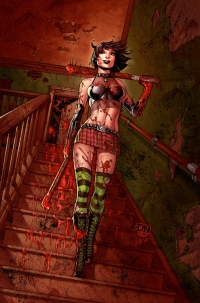
Cassie Hack from HACK/SLASH by Tim SeeleyHi everyone,

I am excited to announce that I am one of the developers of a card game based on the horror comic HACK/SLASH by Tim Seeley!

Produced by Eden Studios, the game was designed by Matt Papa and the development team includes M. Alexander Jurkat, James Lowder, who is also the current editor for the HACK/SLASH comics series, and yours truly!

Currently, the comic is published through Image Comics. You can read a really good interview with Tim Seeley conducted by Newsarama.com about the move from DDP to Image.

Both the HACK/SLASH card game and the RPG will be published through Eden Studios, who published the BUFFY: the VAMPIRE SLAYER, ARMY OF DARKNESS and ANGEL RPGs.

Here’s a quote from the press release:

HACK/SLASH creator Tim Seeley will take an active role in the development of the games. “I grew up reading comics and playing RPGs,” Seeley explains, “so I’m thrilled that a company as great as Eden Studios is giving people a chance to play around in the world of HACK/SLASH. And it’s fantastic to see Cassie and Vlad on a roster alongside such stellar horror licenses as Buffy and Army of Darkness!”

A prototype version of the HACK/SLASH card game will be available for demo play at the Eden Studios booth (#209), at the upcoming Gen Con Game Fair, August 5th through 8th, at the Indiana Convention Center in Indianapolis. — SOURCE: Eden Studios To Bring Fan Favorite Comic HACK/SLASH To The Gaming World

I am absolutely thrilled to be a part of this for many reasons on so many different levels. As a fan of HACK/SLASH and horror, well, everything, I can tell you that this card game really targets the mood and theme of the comic. Matt Papa did an exceptional job as the primary designer and the collaboration that we’ve done on this game has made it even better.

Don’t take my word for it, though, because you know I’m going to rave about it. So, if you’re going to GenCon: Indy, stop by the Eden Studios booth and play the game for yourself. Or… as Cassie would say… “Suck it.”

My DIY Recipe for Thai Peanut Butter Stir Fry

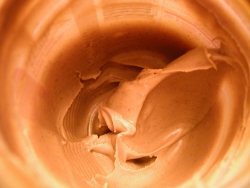
peanut butterHi everyone! This week’s recipe is my concoction for a do-it-yourself Thai peanut butter stir-fry. I call it DIY because it’s never tastes the same twice! This recipe’s instructions are cooked in a wok, so keep that in mind if you want to cook it in a different pot.

Primary ingredients:

(a) Package frozen veggies (any will do)
(b) Choose your meat or protein (I prefer pork with this particular recipe)
(c) Choose your grain (I prefer whole wheat egg noodles)

To brown your meat, you’ll need:

Garlic
Onions (I prefer scallops)
Sesame Oil

Heat 2 tablespoons of sesame oil in a wok on medium heat. Add your meat and toss frequently. (If you’re using tofu, recommend cooking it according to its instructions and then adding that last so it doesn’t get too gushy.) If your meat starts sticking to sides of pan, toss in a little bit of broth or apple cider vinegar. Once meat is fully cooked, add veggies and cover.

Sauce:

1/2 to 3/4 cup of any peanut butter (HIGHLY recommend the Asian Peanut Curry Spice from www.pbloco.com)
1/3 cup of low sodium soy sauce
2 tablespoons chili paste

Stir the sauce thoroughly. It will be thick, almost like the consistency of a frosting, but that’s okay. After the veggies have had the chance to cook a little bit, add the sauce and stir. There will be some juices in the wok from your cooking, but that helps spread the consistency of the sauce. The more chili paste you use, the spicier the sauce will be. If it’s too spicy, tone down with cinnamon or honey. The grains will help ease a sensitive palate; I recommend not adding the grains to the wok for that reason.

Typically, I also crush peanuts and scatter them over the top. Lots of variations and different ways to make this recipe, but the sauce is pretty simple.

Remember, the secret sauce is the best part but you can spice it up (or down) as needed. I’ve also tried this recipe with cashew and almond butter; so far, peanut butter spreads the best. If you’re sensitive to peppers, just take it down a notch and add something a little sweet to balance the spice.

Hope you enjoy this spicy concoction!

Are You Overestimating Your Value as a Writer?

If you’re a writer and you want to get published, you often have to deal with with other people’s expectations about your work. There’s another layer of expectations, too, because you probably have personal assumptions about how you value yourself and your work. The two spheres, while similar, are very distinct. You see, when you overestimate what you’re worth, you will make certain career decisions based on those assumptions. The reverse is also true as well.

Did you know that your expectations can negatively impact your relationship with others in the publishing industry as well? Rachelle Gardner, a literary agent who is very active online, shares some of the writer expectations she’s encountered and gives very direct reasons why they are not based in reality.

…there are many writers who hold on to unrealistic expectations long after reality should be setting in. This is an ongoing concern for agents, editors, and publicists who constantly find themselves not living up to writers’ expectations. In many cases (and yes, there are plenty of exceptions), the writer’s hopes and beliefs were simply too idealistic to begin with. –SOURCE: Managing Expectations by Rachelle Gardner

If you aren’t clear as to whether or not your personal expectations will damage your professional reputation or sour your experiences as a writer, be sure to read Managing Expectations by Rachelle Gardner. It’s definitely worth your time.

Providing a Service Versus Offering an Asset

For any creative professional who is providing a service, the difference between making money now and making money over the long-term can be pretty frightening. On the one hand, we all have the tendency to make decisions based on the power of a dollar. How many jobs have we taken that we were over-qualified for? How many assignments did we take because we needed to pay a bill?

Are You Providing a Service?

The idea that you, as a creative professional, are providing a service goes much deeper than making those quick decisions. Let me walk you through an example of what I’m talking about.

Let’s say I get hired to write a story set within the Hellboy universe. (Hah, I wish!) Because that setting is owned by Mike Mignola, I would not own the rights to what I’ve written. Since I already know the setting, I don’t need to spend a lot of time learning about Hellboy, so I wouldn’t lose a lot of time there. I would, however, need to research new stories within the setting because there’s already been a lot of myths covered. Then, there’s the time it would take to write the story and go through the editing process. Once the story was done, I can’t do anything else with it because now it belongs to someone else. Even though I wrote for a setting I love, I still produced an asset for someone other than myself. In short, I provided a service to develop something that someone already had a need for.

This example highlights how writing for a tie-in property typically works. The reality of being a creative professional is that we produce content for other people in order to make a living. I look at the process of developing an asset for someone else as our ability to provide a service rather than produce a deliverable. Other examples range from writing website copy for someone else’s business to graphic design to developing a game and pitching it to a publisher. The concept, though, is pretty simple to follow once you start tracking how the money is flowing to you. If you get paid up front for the work you’re doing, I feel that it’s helpful to look at your time as a service related to product development. You are, in effect, developing and providing an asset that someone else needs and will, in turn, sell.

Or Are You Creating an Asset?

When you design something for other people to purchase that you have more control over, then you’re creating an asset. An example of that is an illustrator creating a clip-art CD or offering prints for sale of artwork they own the rights to.

Now, there are advantages to both business models because, in many ways, an asset’s value increases depending upon how many people want that asset. I could design an interactive fairy tale for you, but if you didn’t want it, then it’s not worth anything and I’d lose money because I had just spent all that time creating something you don’t care about. The reality of developing your own assets, is that it isn’t enough “just” to create the asset. You need to figure out how you can get people to pay for it. For a writer, that means you have to develop a strong base of readers that will invest in your work.

A really good example of what I’m talking about here, are some of the arguments that self-published authors make. To those that don’t understand how publishing works, the publisher is greedy because they have too much control over the author’s asset (e.g. the book). What they don’t understand, is that the publisher is providing the author with a better chance of reaching readers which makes their asset more valuable. Even though there are many services out there that offer some of the same services as a publisher does, the majority of self-published authors don’t sell thousands of copies of their work for a variety of reasons. For starters, those services are not discriminate; they do not turn down an author based on the quality of the work. Publishers do, because they understand that books are assets that represent the author, but also their brand name, too. This is why authors who go through traditional models typically sell more books simply because of the way publishing works.

Then What?

Now, the examples I mentioned above may not apply to you specifically, but the idea is still the same. If you think about your time as your primary asset, then consider the following questions: Do I own what I create? If so, how am I getting paid for it? If I’m not getting paid what I’m worth, then how can I get paid more?

For myself, I don’t attach a “good” or “bad” value to providing a service versus offering an asset because I look at them in terms of different business models. Which is, realistically, what they are. I’d absolutely write a tie-in story for a property I’d love; on the flip side, I’d still want to write a fun story of my own, too.

Not sure about what you think about my post today, but I feel this idea is pretty important. That’s part of the reason why there’s so many changes going on here behind-the-scenes that I haven’t announced yet.

Deep thoughts today! Do these questions resonate with you? Why or why not?

Previous Posts Next Posts


Looking for Monica’s books and games that are still in print? Visit Monica Valentinelli on Amazon’s Author Central or a bookstore near you.

Archives

Back to Top