
What Does Tolerance Mean?

In addition to Banned Books Week 2010 rearing its head in your local library, it’s also election season. Politics often brings bold claims and idealistic messages. Right now, the media is rife with stories about things that push people’s buttons so they react to these statements — including some authors, I might add. As an advocate for tolerance, I wanted to open a dialog about what this word means in today’s culture. You see, I think that many words (like tolerance or racism or patriotism) mean different things to different people.

To me, tolerance is very simple. You treat other people with respect — regardless of who they are, what they look like or where they come from. Sometimes, that means you respect a foreign culture by adapting to it while you’re in their country. (When in Rome…) Tolerance also means you interact with an individual and don’t make sweeping generalizations about every other person that shares a similar strait.

For example, if someone is acting like a jerk, a tolerant person would say that person is being a jerk. That does not mean that if the person was Italian, every other Italian is automatically a jerk. To think that, means that you assume people are either genetically hard-wired to be jerks or they magically turn into jerks because they wear similar clothing or live in the same place. To me, that is the opposite of tolerance. Note: I won’t bring religion into this, because I believe faith is a very personal thing, but there are extremists in every belief system that’s out there. Religious or not.

Preventing tolerance involves education, patience and excellent listening skills. No one wakes up and is automatically tolerant — including me. Tolerance, like many behaviors, are learned. Either someone has to teach it to you, or you have to learn it for yourself. When I don’t understand something, like a religion or a culture, I ask questions about it. Then? I either talk to people or read about it from different sources to put aside my prejudices. (Hint: I’m an avid reader.) If I make a charged statement that people disagree with, I talk about it. Maybe I was being intolerant and said something I didn’t mean. No one’s perfect and, especially on the web, semantics can complicate matters.

In my mind, your personal efforts to be tolerant are only one side of the equation. What happens when the other person isn’t being tolerant? If you’ve gone as far as you can go, then you walk away. Just like it’s your decision whether or not you’re going to be tolerant, it’s theirs, too. If someone is intolerant, pissing them off will make matters worse, not better.

Of course, tolerance sounds great in a vacuum. However, people are people and it’s a miracle we agree on anything – especially when you have over six billion people on the planet and counting. Phew! BIG number. Right? Can you tell me how many of those speak English? Have slanted eyes? Are broke? Don’t need to use a calculator? Live in caves? Like the color blue? It’s statistically and logistically impossible to think that everyone associated with one identifying trait believes, thinks and acts the same way at the same time. Just like you have your own thoughts and can’t agree on everything with your husband/best friend/cat/dog/priest/lover/whoever, there’s no way that anyone else does either. Here’s a frightening example: How many conversations have you had about what to eat or where to go for dinner?

Yes, people can have tendencies if they’re in a particular group because of the company they keep, but a tendency is not the same thing as a guarantee. Any person can always choose to act according to what is going on in their own mind. That, in my mind, is where many people lose sight of tolerance. Doesn’t it always comes down to the choices we make and the consequences that occur as a result?

As I mentioned earlier, I wanted to open the discussion to hear your thoughts. Since this is a very heated topic for many people, I will screen out comments that use profanity or spout racial epithets. My goal here, is to encourage tolerance by listening to your thoughts and hearing what others have to say.

What do you think tolerance means?
It’s Nice to be First Sometimes

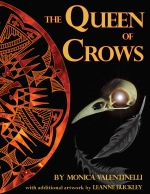
The Queen of Crows by Monica ValentinelliYou’ll have to excuse me, dear readers, for I’m allowing myself to be happy with something I’ve done. It’s an unusual feeling, as I tend to shy away from self-promotion, but right now I’m basking in the originality of THE QUEEN OF CROWS.

As several of my reviewers pointed out, no one had ever seen an e-book like the one that Shari, Leanne and I had put together. It’s a nice feeling to know we were one of the first enhanced e-books out there. Admittedly, I didn’t really plan on being one of the first authors to embrace a unique format for THE QUEEN OF CROWS e-book. My goal, simply, was to develop readers who would be interested in the setting and the genre. In my mind, that ended up being a huge success because readers have come forward explaining that they haven’t read a lot of native american horror and they enjoyed the attention I gave it.

Just yesterday, I started to notice other authors and publishers chatting about ways on Twitter to enhance their e-books. I suspect we’ll see a lot more unique e-book formats coming out in the months to come. In my mind, that’s a good thing.

To me, the reader always takes the crown. For without readers, an author’s stories would never get read.

If you’re interested in reading more about THE QUEEN OF CROWS, be sure to check out On Writing a Historically-Accurate Paranormal Short Story and the video trailer for THE QUEEN OF CROWS with music composed by James Semple (TRAIL OF CTHULHU, HOUSE OF HELL).

If you have, I thank you from the bottom of Mahochepi’s cold and rotting heart.

My Guest Post: Aliens, Naming and Naming Conventions

Hi,

Just wanted to drop a brief note that this month’s post over at Apex Book Company continues my series on How To Create an Alien Language with names and naming conventions.

In this post, a talk about how names and naming conventions are often a reflection of culture rather than a mechanical permutation of letters. Here’s a quote:

Whether you’re describing our world or an alien planet, any intelligent life form will associate values with a particular place or location. Some languages employ proper nouns that don’t have a meaning associated with it. Other languages that describe certain locations may translate to a string of phrases and is truncated for the proper noun. “Tall Mountain” may be one way of describing a mountain top. “Gateway to the gods” might be another. When it comes to naming conventions, there’s really no right or wrong way to do it, because the names are often a reflection of culture and technology. Take, for example, how common surnames like Miller, McGilroy, Johnson, etc. were created. Some were based on where you lived, who your father or clan was, or what you did for a living. Consistency in naming conventions depends upon where you live, your genealogy, and what period of history you live in. –SOURCE: Creating an Alien Language: Names and Naming Conventions

If you’re interested in this month’s article, be sure to hop on over to Creating an Alien Language: Names and Naming Conventions at Apex Book Company.

Cheers!

My Schedule at Geek*Kon

Hi everyone,

I have invited to be a guest at Geek*Kon in Madison, Wisconsin. I’ve posted my schedule below for those of you who are interested in dropping by. Here’s my schedule:

FRIDAY, SEPTEMBER 3rd

2:00pm-3:00pm – Opening Ceremonies

SATURDAY, SEPTEMBER 4th

12:00pm-1:00pm – Game Publishing
2:00pm-3:00pm – Writing Panel
4:30pm-5:30pm – World Building

SUNDAY, SEPTEMBER 5th

12:00pm-1:00pm – Being an Effective Reviewer/Critic
2:00pm-3:00pm – Autograph Session
4:00pm-5:00pm – Closing Ceremonies

Tribes and Our Role as a Writer

If you’ve been following my blog lately, you’ve probably read more about me than you have in a long time. While there’s a lot of reasons why I wanted to open up more, some of which will relate to my upcoming publications, there’s another one that I wanted to explain to you.

You see, even though we are all writers and we’re all different, there’s something interesting that happens when we write characters. By describing what a person looks like or what they’re interested in, we put them into buckets or categories without even realizing it. Geeks. Athletes. Artists. Musicians. Doctors. Reporters. Detectives. These keywords define our characters by placing them into tribes, but they can also limit them.

If you didn’t know me, what would you think if I told you I was a gamer? Or that I have performed a lot of occult research? Or that I enjoy cooking? Love yoga? Have a lot of business acumen? Now, what would you do if I were to tell you that I am of European descent? A woman?

Traditional psychology spells out for us that this is how our human minds naturally function. We need to put things into buckets in order to process, record and store information. Even within the geek culture, which has a reputation for embracing different types of people into its own tribe, there are groups within groups that create separate micro-tribes of people. If you look closely enough, you can see this effect in every organized and unorganized aspect of your life. After all, every business has its own culture or tribe. The same goes for volunteer organizations, too. Sure, you might argue that we are drawn to the tribes that we’d best fit into, but what if you’re not? Logistically, it’s impossible for you to fit the criteria of every tribe that you may be in contact with, because that criteria is often shaped by certain people within the tribe depending upon how long they’ve been involved with it and what they have to gain (or lose).

Over the years, I’ve talked to a lot of writers and editors about this idea and I’ve found that most of them feel the same way that I do. All too often, we may feel like outsiders or the alien one within any one tribe for a variety of different reasons. While being an outsider does suck, our role as the outsider allows us to communicate appropriately with other members of the tribe in order to tell them a story.

Today, how we view the outsider is a reflection of our modern, unforgiving culture. In olden times, the role of the storyteller fell on the shoulders of a traveling bard or performer, who was expected to a tribe in and of himself. It’s very challenging for most writers to naturally drift toward a tribe because we are self-aware in a way that automatically sets us apart, which can cause an endless amount of neuroses because there are one too many social stigmas about how wrong it is to be alone. Ever go out to dinner by yourself? When was the last time you treated yourself to a movie? Our culture is not geared for people who are social introverts, because our society is built to either repel the outsider or worship it. In a way, you could say that our culture doesn’t know what to do with an outsider, even though people automatically create them by separating others into tribes. I know I’m glossing over the social implications here, because sometimes the outsider is a very real or criminal threat. In this case I’m saying that the average guy on the street who goes to see a movie by himself might not have ulterior, criminal motives. He (or she) might just be lonely or they might have wanted to see a movie.

The funny part about writers, though, is that we have a different role to play than if we were a member of a tribe. By our very nature, we have to have some distance between ourselves and other people; otherwise we become homogenized and lose our unique perspective on the tribe. For this reason, I think this is why it’s so hard for people to be inclusive of other cultures, even when they’re intentionally thinking about it, because it’s counterintuitive to their natural instincts. Of course, many tribes make decisions just for the sake of attracting others like them because they know what to do with them. The more people (or the more popular) a particular tribe gets, the harder it will be for the tribe to remain as it is without changing. That, more than anything, is what I think freaks out most tribes. In many cases when a person doesn’t fit into a tribe, it’s because they don’t naturally fit into the group and not because they are somehow bad or good.

Of course, the role of the outsider doesn’t just apply to a writer. It simply describes “the other,” which is a natural by-product of human psychology. Not all things will fit into the same bucket, because we will find a way to separate them. The questions that I’m exploring right now are: How do I write a story for a tribe without automatically creating or punishing an outsider in the story arc? Is it even possible? Or should I avoid trying to be all-inclusive and focus my efforts solely on the tribe itself?

Guess you’ll just have to wait and find out.

Previous Posts Next Posts


Looking for Monica’s books and games that are still in print? Visit Monica Valentinelli on Amazon’s Author Central or a bookstore near you.

Archives

Back to Top